
Hernando County Wanted Fugitives
The Hernando County Sheriff’s Office Most Wanted page is the county’s own public display of fugitives. Each entry may carry a photo. It can also list basic biographical facts, a last-known address, a warrant or case number, and the listed offense. Updates come on no steady schedule. There is no reliable headcount either. Photos stay on the sheriff’s page and do not appear here.
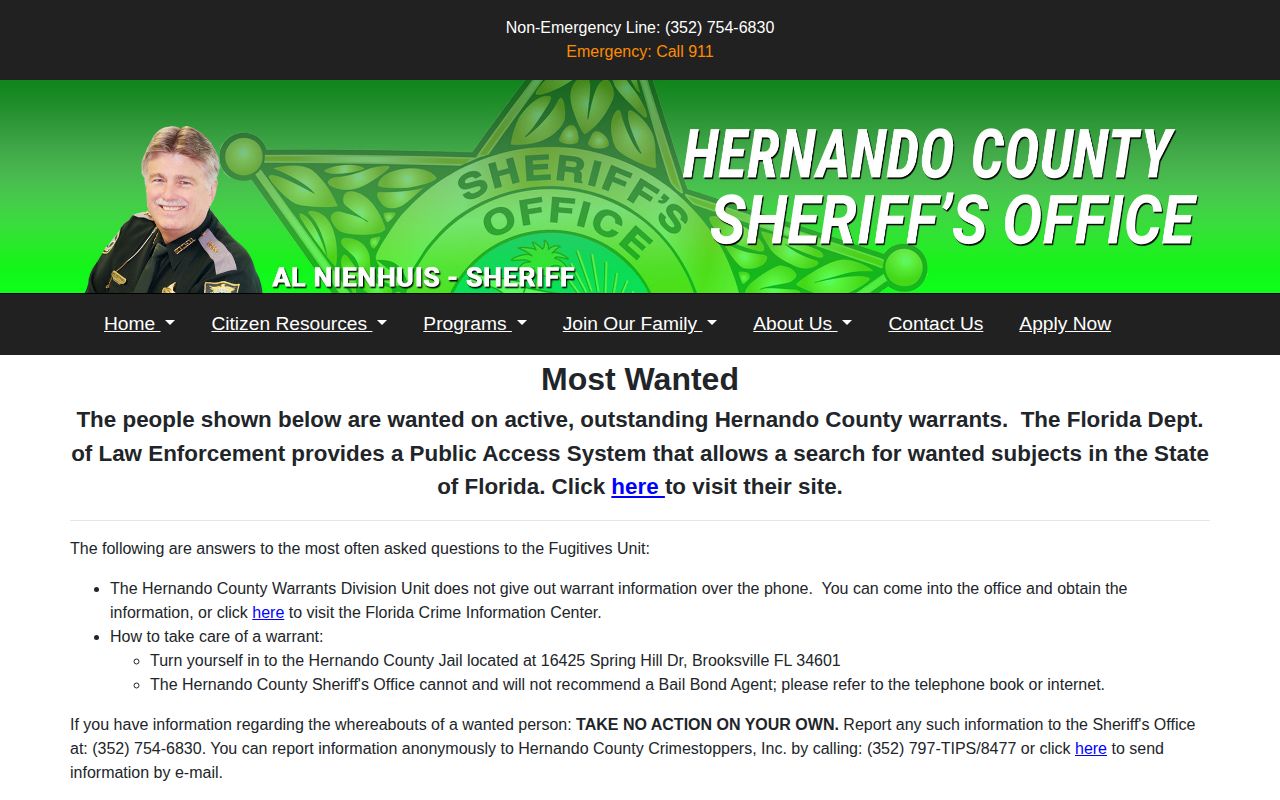
One detail matters more than the rest: the date. The sheriff’s page states its list was last updated on December 5, 2016. That makes it a set of aging leads, not a live statement about who is wanted right now. A warrant may have been served, cleared, or withdrawn years ago. Plenty of active warrants never make a short public list at all. Treat any entry as a starting point. Then verify with the agency. The official HCSO wanted interface shows why that caution is warranted:
Hernando County Wanted Listing Fields
No two HCSO entries look alike. So no single field is guaranteed on a Hernando County wanted notice. A photo helps with recognition. Still, people change, and old images can mislead. Date of birth and the warrant or court reference make far better matching points. Read enough detail to separate people who share a name. The offense line describes why the person was listed at that stage. It does not report how a case later ended in court.
| Field | What it shows |
|---|---|
| Photograph | An official identifying image when HCSO posts one, which may not reflect current appearance. |
| Name | The name used for the Hernando County wanted entry. |
| Race, sex, and birth date | Biographical points used to avoid a same-name mismatch. |
| Hair and eyes | Short physical-description codes that vary by entry. |
| Last-known address | A location associated with the entry, not proof of a present location. |
| Warrant, order, or case ID | A reference that may help the issuing agency or court locate the matter. |
| Alleged offense | The charge tied to the wanted notice. |
A court case number can open another door. The Hernando County Clerk’s record may reveal later filings and how the matter concluded. That paper trail is separate from the sheriff’s wanted display. A docket can show changed charges or a closed case. But only the issuing agency can confirm a warrant’s current standing.
Note: A last-known address is historical identifying data, never an invitation to visit, watch, or contact that place.
Browse Hernando County Wanted Listings
Think of the sheriff's wanted page as a recognition tool. Confronting someone listed there is never the right move. Instead, note the publication date, the entry details, and any instructions the agency gives. Want to know whether that person was later booked into the county jail? Check the Hernando County booking and mugshot lookup after you review the wanted entry.
- Open the official HCSO Most Wanted page and read its visible update date before reviewing any entry.
- Compare the full name, birth date, descriptive fields, and warrant or case identifier. Do not rely on a face or name alone.
- Check the statewide FDLE wanted-person system for fresher information and note which agency is identified as the source.
- If recognition concerns public safety, keep distance and report the facts through HCSO or Hernando County Crime Stoppers.
- If the record may concern you, stop searching for ways around service and seek lawful help through counsel or the court.
A wanted list is selective by nature. It is not the jail roster, an arrest log, or a Clerk docket. The jail roster tracks booking and custody in the county. The court docket follows prosecution and case outcomes. The Florida Department of Corrections offender search covers state prison and supervision records, not local warrants. HCSO and FDLE own wanted information. Keeping those roles straight prevents false matches and keeps an old web entry from passing as current fact.
Verify Hernando County Warrants
Want a warrant answer by phone? HCSO says no. Its Warrants/Fugitives Unit does not give warrant information over the telephone. The office instead points the public to appear in person or use the Florida Crime Information Center route through FDLE. The FDLE Wanted Persons Search is the official statewide interface for this. Results there are informational. The agency holding the warrant has the final word on whether it is still active and whether the match is right. The official FDLE form is the best public starting point for a specific Hernando County warrant check:
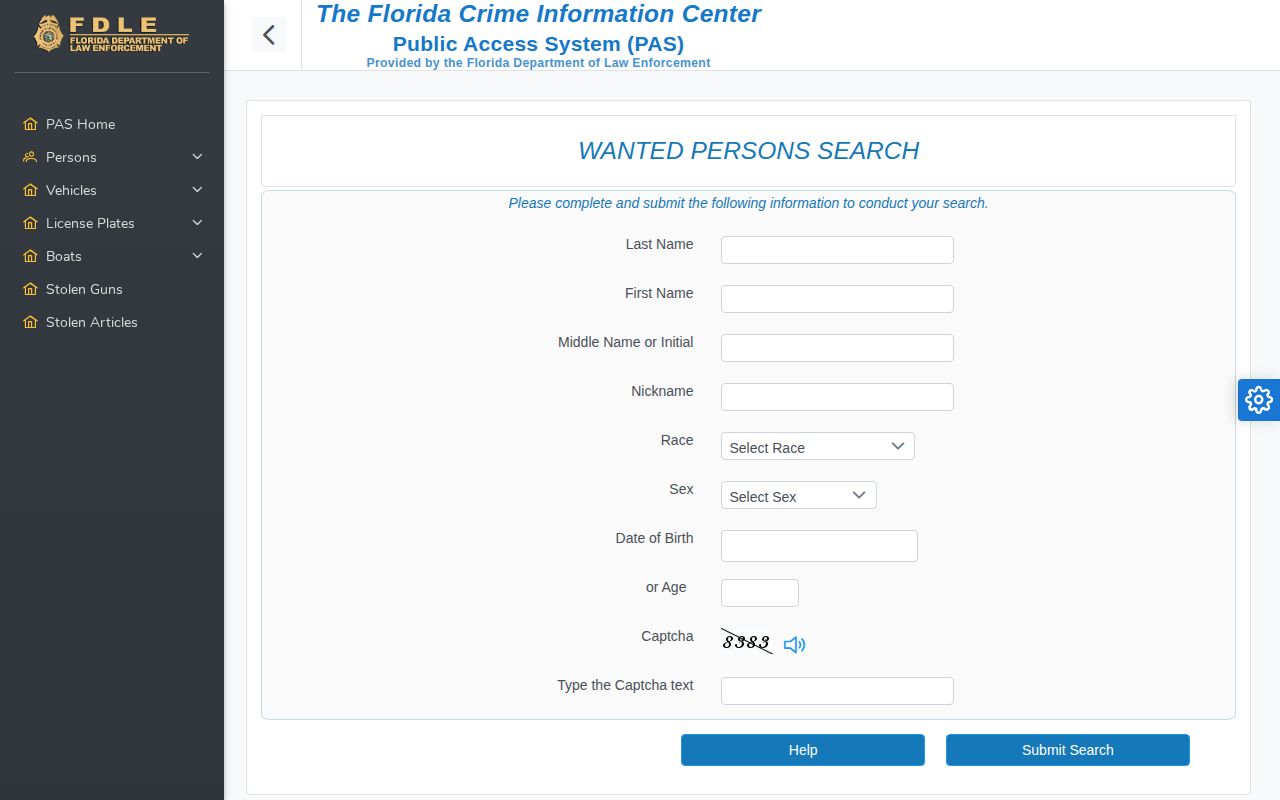
Begin with exact identity facts. Then read the result for an agency name and a reference number. Is HCSO the source? Follow its direction and go to the main office in person. Does the result show a court identifier instead? The Hernando County Clerk criminal-courts gateway opens the public case path. A docket search never substitutes for live confirmation from the agency.
- Search FDLE with the person’s correct name and available identity facts.
- Compare birth date and description so a same-name record is not assumed to be a match.
- Record the originating agency and any warrant, order, or court identifier shown.
- Confirm through that agency’s approved channel. For HCSO warrant information, follow the stated in-person route rather than calling for status.
- Use the Clerk docket for case history, then contact counsel or the court for lawful next steps if the matter may be yours.
Need a copy of an existing HCSO public record rather than a live warrant answer? The HCSO Public Records channel names the records custodian and lists the request routes. State the name, date, and reference with care. A narrow request moves faster. Even then, a records response is not a promise about present warrant status.
Note: A blank FDLE search does not prove no warrant exists, and an online hit still needs confirmation from the listed agency.
Hernando County Warrant Record Types
Hernando County's public sources don't offer a tidy legal catalog of every warrant type. What you'll actually find falls into three buckets of warrant-related information. Treat these as record distinctions rather than legal advice. The label on an HCSO or FDLE entry, together with the underlying court file, tells you what a warrant actually is. Guessing from the listed offense alone is a mistake.
| Record type | What the source says | Best next check |
|---|---|---|
| Active outstanding Hernando warrant | HCSO’s description for the people featured on its local wanted page. | Check FDLE, then confirm with the issuing agency. |
| FDLE wanted-person result | A statewide informational record that can identify the originating agency. | Confirm identity and current status with that agency. |
| Warrant, order, or court identifier | An entry-specific reference that may connect a notice to an agency or court matter. | Review the Clerk docket for case context, then seek official confirmation. |
This distinction guards against two common mistakes. A person can have an active matter yet never appear on HCSO’s short wanted page. An old featured entry can also linger after the facts have changed. Neither the presence nor the absence of a photo settles current status. Rely on the reference data and the agency source instead.
Resolve a Hernando County Warrant
Think a Hernando County warrant concerns you? Take a safe, lawful route. A licensed attorney or the court can guide you through confirming the case and choosing the right response. Some moves backfire. Never go to a last-known address, send someone to test whether officers are watching, or look for ways to dodge service. Those choices create risk and resolve nothing with the court.
The Clerk record can help where records are public. It shows filed charges, hearings, later docket events, and disposition. What it cannot do is turn a dated HCSO web entry into live warrant confirmation. Counsel can interpret the record and communicate through the proper channel. If in-person contact with HCSO is required, follow official instructions and any advice from your attorney.
Warrants and charges are process records. They may lead to an arrest and booking. The court’s later disposition records how the matter ended, whether charges were changed, dismissed, resolved by plea, tried, or otherwise concluded.
Hernando County Warrant Tips
HCSO keeps its advice simple. Do not approach a wanted person yourself. A strong tip sticks to the basics. Say what you saw, when you saw it, and why you think it matches the fugitive listing. Skip the drama and the guesswork. Posting names or photos online can backfire fast, since a wrong match harms an uninvolved person and a public post may tip off the subject. Hand what you know to the proper channel and let trained officers take it from there.
Hernando County Sheriff’s Office
18900 Cortez Boulevard
Brooksville, FL 34601
Non-emergency: 352-754-6830
Hernando County Crime Stoppers
Tip line for information about a wanted person
352-797-TIPS (8477)
Hernando County Crime Stoppers is where HCSO points people who want to give an anonymous tip. Its intake options and reward rules shift over time. Check with the program first if anonymity or a payout matters to you. For information that needs no urgent police response, the sheriff's non-emergency line works fine.
Note: Give what you observed to law enforcement directly, not to an online crowd hunt that could misidentify someone or derail a case.
Hernando County Warrant Alerts
The Hernando County Sheriff rolled out its official app in July 2019, for iOS and Android. The launch materials highlight HCSO news, press releases, alerts, reminders, and social media feeds. Those features are handy for following what the agency shares. They fall short of a complete wanted list, though. Nothing confirms the app offers live booking photos or a full warrant search. Compare the official HCSO app announcement with the current app store listing before counting on any feature.
Press releases and social posts only cover what the agency chooses to share. Someone left out of those channels can still have an active warrant. An old post can also linger online after a case status changes.
VINE plays a different part altogether. It links to Hernando County jail records and sends custody-status alerts for a matched booking. In short, the jail roster is the verified source for booking photos, VINE handles custody alerts, and the Sheriff app spreads agency news. For a current warrant check, none of them replaces FDLE or the agency that issued the warrant.